Product Design
Batch 2002-2004
(60 items)
Product DesignBatch 2002-2004
(60 items)
(60 items)

Design of a human powered bionic boat
by Abhijeet Kumar
by Abhijeet Kumar
The project aimed at utilising the propelling and manoeuvring qualities of fish to conceptualise a human-powered boat. Similar projects have been studied deeply under the discipline of bionics; however, what was needed was the conceptualization of the principle into a feasible product, which was ultimately the aim of the project. The initial task was to come to terms with the existing studies in this area and outline guidelines that had to be followed. As I understood from the data on scale models, I have been solely devoted to perfecting the motion of fish. Little effort has been made to put the principle into product form. In our effort to conceptualise a product, a scale model of the mechanism was made and experimented upon. Useful observations were taken from our experiments with the model; however, given the constraint of time in this project; the data generated is mostly qualitative. Although this project was with me for only a few months, it was undertaken under Prof. V.P. Bapat, IDC, who is an authority in the field of bionics. Given his special interest in this area, the project is under development under his guidance.
Details >>
Styling of Small Sports Utility Vehicle
by Abhijeet Kumar
by Abhijeet Kumar
The project idea emerged out of a need for such relevant vehicles in India. Our road infrastructure is so designed that one does not have to go on any off-roading adventures. It is not a surprise why sports utility vehicles are not so popular in India, despite all their suitable features meant for our kind of roads, because imported SUVs are simply not affordable and not many choices are left in indigenous SUVs. Apart from this, SUVs are massive in nature, which makes it difficult to drive on city roads, so a smaller version of a regular-size SUV will be good enough to serve the users’ needs. The sales figure of the Mahindra Scorpio gave us a ray of hope to proceed with this project, which could be the choice of any Indian SUV buyer. This project is an attempt to design a vehicle that will be a perfect cross between a sport utility and an urban activity vehicle within a price range of 6-7 lakh rupees.
Details >>
Design of a Three Passenger Auto Rickshaw (the Interiors)
by Abhijeet Kumar
by Abhijeet Kumar
The project was approached by a company with a vision to launch a three-passenger autorickshaw, which would enter the market with an impact on competing against the country’s best-selling vehicle in that segment, ‘the Bajaj RE’. The vehicle should have its own identity, be better engineered, and be designed to suit all climatic conditions. Currently, the company doesn’t have any products in this range. Their other products have good demand in the northern part of India but were never accepted in the southern, western, and eastern parts of India. The decision to produce a three-passenger autorickshaw was a bold move by the company because a failure might sweep them away from the business. Currently, the company is not doing very well, but a success would give them a boost to flourish further and would cause worry for the competitors. The nature of the project demanded some radical changes in the vehicle so as to be different and better than the competitors’ product, but at the same time, it should not deviate too much from today’s autorickshaw.
Details >>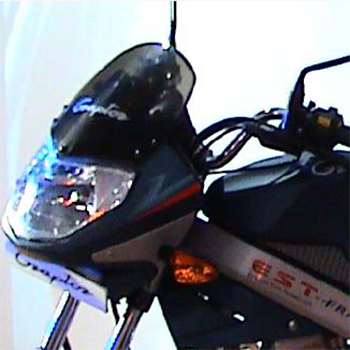
Style trends and visual perception in small cars
by Ajay desai
by Ajay desai
This special product design project by Ajay Desai (Batch 2002–2004, IDC IIT Bombay), supervised by Prof. B.K. Chakravarthy, explores the interplay between style, trends, and visual perception in the context of small automobile design. The study treats “style” not merely as a technical specification but as an expressive, almost artistic medium—something that can’t be fully quantified but needs to be sensed, timed, and communicated. It also examines how fashion, aesthetics, material innovation, and the tempo of life drive desirability and exclusivity in automotive styling and how such factors influence consumer perception at first glance.
Details >>
Trends and Visual perception in Car Styling
by Ajay desai
by Ajay desai
Designers need to keep reinventing their products to keep up with the customer‘s expectations, which depend on prevailing styles and trends and their impact on the user's visual perception. Users get visually trained with the existing products (particular style and trend) on the market and also get tired of so-called old products because of the continuous change in trends. Both training and tiredness are factors that influence users perceptions or expectations of a product. Thus, style, trends, and the user's perception ultimately affect the life of the product. That's why these terms are vital for the company's profit figures, but they are not easy to predict. This project is an effort at systematic understanding and aims to establish a link between the related key issues. And also to find out the possible way so that designers can sense this tiredness among consumers sooner and can act accordingly.
Details >>
Summer Training at Pinnacle Industries ltd. and Bajaj Tempo ltd.
by Ajay desai
by Ajay desai
Bajaj Tempo Ltd. is a 45-year-old company with an annual turnover of 850 crore. They have two plants, one in Akurdi, Pune, and the other in Pithampur, Indore. They have an in-house R&D centre with 400 engineers and two industrial designers. Pinnacle Industries Ltd. was formed in June 1996 with an annual turnover of around 35 crores.
Details >>
Instrumentation for Medical Diagnostic laboratories
by Ajay desai
by Ajay desai
The Indian diagnostic market has undergone some major changes in the last four or five years with the advent of large pathology laboratories. Large-path labs have been showing impressive growth rates of 50% over the past year, while overall market growth was estimated at 25%, according to metropolis studies claims published in Lab Watch on June 16–30, 2003.
Details >>
Work station for the medical diagnostic laboratory
by Ajay desai
by Ajay desai
The Indian diagnostic market has undergone some major changes in the last four or five years with the advent of large pathology laboratories. Large-path labs have been showing impressive growth rates of 50% over the past year, while overall market growth was estimated at 25%, according to metropolis studies claims published in Lab Watch on June 16–30, 2003.
Details >>
Design of wall clocks using coil technique in Bamboo with the focus of Design transfer
by Ajay desai
by Ajay desai
The world has discovered bamboo as an eco-friendly, fashionable material and as an alternative to wood and leather. In Western countries, bamboo-made products are highly appreciated and can fetch a much higher price. With the richest bamboo genetic resources next to China and rich handicraft traditions, India too is aiming to become a global player. The government and private players in India started pumping money into the bamboo sector. The bamboo sector needs an integrated and multifaceted approach, going beyond the setting up of enterprises, and a concomitant focus on resource development, markets, technology transfer, community development, awareness building, product development, and diversification. The use of indigenous and new industrial tools is of great value to the craftsman who works day-in and day-out in bamboo but still resorts to old and sometimes inadequate methods for production and produces the least profitable products. Product design initiatives are needed in order to meet consumer expectations of the high potential market. The objective of the project is to design high-value wall clocks from existing craft setups in rural areas based on the human resources of bamboo crafts and train them with tools, technologies, methods, and techniques through organising training and production workshops.
Details >>
Product Skin
by Anand Asinkar
by Anand Asinkar
Product Skin can also be said to be the aesthetic wrapping (or style) in which the product appears to us. The elements of design, such as shape, colour, texture, material, and ornament, when put together, convey the messages that make one product different from another. The skin is also a trigger for what makes one product different from another. The skin is also a trigger for what makes the object desirable beyond its function. The product can be made into two parts. The actual engineering that makes it work, the appearance that makes it work, and the appearance, or the cover, under which the product functions. In some cases, the product and the skin form a combined function as a whole. The function of the product itself gives it a form.
Details >>
V.I.P. LUGGAGE, nasik
by Anand Asinkar
by Anand Asinkar
The establishment of VIP, Asia's number-one luggage manufacturer, in 1971 heralded the birth of modern luggage in India. VIP launched India's first hard suitcase the same year. Since then, the company has grown, not just in size nor in the wide range of product offerings for every travel need, but also in the geographical breadth of our operations. Today, VIP Luggage enjoys an overwhelming 97% brand awareness among India's 950 million people. Over the years, the name VIP has become a trusted mark among travellers, safeguarding their belongings wherever their journey may take them. Its popularity is apparent from the fact that 10,000 direct dealers and several thousand more indirect dealers stock VIP luggage in India alone. Overseas, sophisticated retailers such as London's Selfridges and the House of Fraser stock VIP luggage. The company’s reach extends across the globe, to the United States, Germany, Spain, Italy, and other countries. Four factories produce nearly five million pieces a year, making VIP the second-largest producer of luggage in the world. The state-of-the-art VIP Design Lab at Nasik is constantly working towards product improvement. VIP's innovations have earned them numerous international patents and design registrations. VIP is committed to giving their customers products that have passed the most stringent tests of quality control. The efforts have earned each of their factories ISO certification. The plants are fitted with advanced pollution control equipment, reflecting our concern for the environment and our position as a respected member of the local community.
Details >>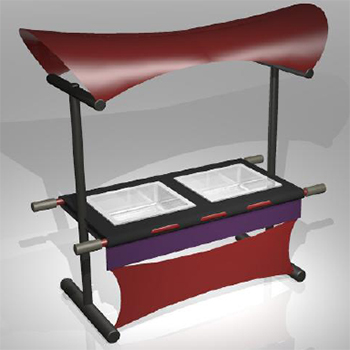
Transportable Catering Equipment
by Anand Asinkar
by Anand Asinkar
Food service is an essential part of our tradition. Occasions are event-specific. Serving hot and fresh food is considered respectable. Not only marriages but also other aspects of our lives, like social gatherings, have become a part of our lives. Caterers play an important role as organizers of this need. It has been observed that the equipment proves inadequate in satisfying the task. The activities needed to be performed are cooking, serving, and transportation. The idea is to understand the problems in performing the activities and provide solutions for them, keeping in mind the Indian context.
Details >>
Design of Transportable Catering Equipment
by Anand Asinkar
by Anand Asinkar
The project is aimed at developing a design for the food industry, essentially the catering industry. It is an attempt to identify a potential niche in a small catering service where investing in equipment is the most important thing. It is also an attempt to develop and identify an area where design has been overlooked. The study that leads to a single solution might not be the best solution, but keeping in mind the users and factors.
Details >>
Design of an Air Cooler
by Anand Asinkar
by Anand Asinkar
The project is aimed at developing a design for the food industry, essentially the catering industry. It is an attempt to identify a potential niche in a small catering service where investing in equipment is the most important thing. It is also an attempt to develop and identify an area where design has been overlooked. The study that leads to a single solution might not be the best solution, but keeping in mind the users and factors.
Details >>
Form and emotion
by V P B Chakravarthi. K
by V P B Chakravarthi. K
The emotional experience of the user towards the products has been argued to become increasingly important in the development of new products. A difficulty with handling individual emotional responses towards products seems to be as intangible as it is appealing. A problem with many of the existing design methods and models for understanding the emotional experience is that they rely on the personal interpretation of the designer. An interpretation that is hard to communicate and justify through a product development project. In most markets, product differentiation is difficult because products are similar in respect to their technical characteristics, quality, and price. Only emotional responses can incite the customer‘s first impression of a product, which strongly influences purchase decisions. The focus of research is to present the process, technique, and specifications that involve the user in the design process, enabling the designer to manipulate the emotional impact of his designs on the user by capturing the intended expressions in form that match what the user desires to see and feel, thereby preserving the longevity of the emotional fit between the product and the user.
Details >>
Design And Development of Mnx Starters
by V P B Chakravarthi. K
by V P B Chakravarthi. K
An experience with a product refers to the effective, ergonomical, and aesthetic reactions of people while seeing or interacting with it. All the products that belong to the same category have identical technical performances, and consumers base their choice on the pleasure a product will give. Companies have come to realise that purely technology-driven design often does not fit with real user needs and concerns. Industrial design, which has effective concern for the user, is prevalent.
Details >>
Re-Design of A Specimen Cutter for Metallurgical Analysis
by V P B Chakravarthi. K
by V P B Chakravarthi. K
New technical applications and the operating requirements pushed to higher levels have created a continued need for the development of new alloys. In the metalworking industry, work pieces of most different shapes and dimensions are made of different materials. The material properties of different metals are to be fully studied before they are sent for fabrication or take the shape of any component. For this purpose, the metallurgical properties of the metals are to be observed and estimated. Based on this estimation, the suitability of the material for the specific purpose will be known. A metallurgist separates a layer of metal from the parent metal and carries out the study based on the requirements. For the separation of a layer from its parent component, a specimen cutter is used in metallurgical laboratories for the mechanical preparation of solid specimens. The project deals with a new design and development of the existing, fully manual equipment with enhanced functionality adopting contemporary technical developments, increased usability, a substantial reduction of human intervention, and aesthetics to create a new identity and reduce monotony, etc., which results in an efficient and accurate output.
Details >>
Design And Styling of Earthmover
by V P B Chakravarthi. K
by V P B Chakravarthi. K
The role of design and designers in the development of industrial vehicles has taken on tremendous importance over the past few decades, influencing almost every category of industrial vehicle as well as many aspects of an individual machine. Although the function of the earth mover is fundamentally the same, regardless of where it is being used, design features are the key elements that make the difference in the choice of purchase. They are to be built into the original design to make implementation easy and to accommodate the functional requirements of the user wherever it is intended to be used. These attributes, which strongly affect how consumers will react to a product, must be designed in harmony with the final appearance and goal so that it successfully communicates in unspoken ways what it is really trying to offer the customer. Styling, form, material choices, colour, colour breakups, and other elements of design are the dimensional aspects that affect the appearance of a product and, more importantly, the whole character that the product portrays to its end users. This project is about achieving the perfect balance between the bookends of appearance and function and targets developing the backhoe loader to enhance its service to the user in terms of functionality and user comfort with appropriate feedback and making it just as pleasing to the eye as it is practical.
Details >>
Sharing Mental Imagery in Collaborative Design
by Darshan Rathod
by Darshan Rathod
The focus of the research started with the goal of understanding mental imagery in the field of design. Several questions related to the nature and role of imagery in design have been a focus of research. Some questions asked are whether creativity depends on imagery or whether discoveries can be made in imagery. This experiment is a continuation of the studies of mental imagery in the architectural design process. The earlier experiments attempted to study the nature of mental imagery in the mind of the architect during the design process and the subsequent sharing of the same with a co-architect. In this experiment, the focus would be on the issues that arise in a team while sharing mental imagery.
Details >>
Training at Blow Plast Ergonomics Limited, Nagpur
by Darshan Rathod
by Darshan Rathod
Blow Plast Ergonomics Limited (BPEL), Nagpur, is a division of the D. G. Piramal Group of Companies. BEPL is primarily interested in SYSTEMS FURNITURE. Operations commenced in 1992 under a technical collaboration agreement with Element International Partnership, Australia.
Details >>
Lifestyle Products in Glass and Steel
by Darshan Rathod
by Darshan Rathod
This project started with a wish to understand materials and the way one could use one's hands to create an object, a product. The scale of the product is very important, and the first thought was of small products, things that one could hold. Lifestyle products were chosen as a domain of work. This phrase provided the necessary direction to understand what exactly goes into defining the word lifestyle and, hence, lifestyle products. The word lifestyle has different connotations and is often misinterpreted for hedonistic pursuits. This made a thorough understanding of the field very important. Probing further, one realised that there is no single definition one could ascribe to the term. The definition existed within various shades, often overlapping and defining the product in various diverse ways.
Details >>
Storage in Bamboo and Metal
by Darshan Rathod
by Darshan Rathod
Introducing bamboo combined with metal. The purpose of employing metal, such as to provide it with a base framework or because of its finish, is to add a lasting quality to the item. It creates a queue of goods to be sold in city markets.
Details >>
Study of Product Skin and its impacts on today’s products
by Kiran Kulkarni
by Kiran Kulkarni
The study of product skins is an attempt to view and speculate on our traditional notions of surface and its impacts on product communication. With the clues observed in nature, it is evident that skin is more than a surface left for your sensory responses. Skins in nature acquire different meanings and relations, which makes our understanding of the object direct, easier, and simpler. An overview of recent technological directions for product skin as assumed by the outermost surface of an industrial product takes a new dimension of use and expression. With the invention of chips and the multifunctional use of products, the outer surface is facing a new challenge of product communication. With the disappearance of physical features, skins behave as extensively used interfaces for various multiple functions and uses.
Details >>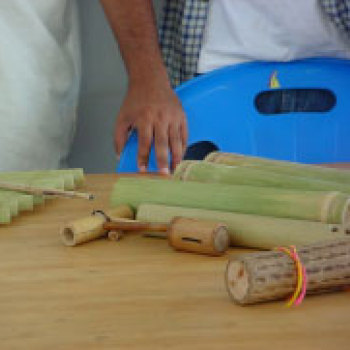
Cane and Bamboo Technology Centre (Cbtc)
by Kiran Kulkarni
by Kiran Kulkarni
As an employee of the firm, I participated in workshops organised to encourage local entrepreneurs to develop bamboo-based products. I was keen to know the design approach of the firm with a unique vision of identifying and disseminating technologies for economic enhancement of craftspeople and small and medium-scale entrepreneurs and also to enhance the skills and quality of goods produced in the cane and bamboo sector of North East India. I was also involved in conceptualising a new product range for bathroom accessories, considering the local crafts and the species of bamboo. I travelled extensively in the states of Assam, Meghalaya, and Tripura to understand the skills of people, their culture, and their long association with the material. I attended a workshop organised by NID and BCDI in Agartala on the making of musical instruments from bamboo.
Details >>
Design of Musical Products in Bamboo
by Kiran Kulkarni
by Kiran Kulkarni
Music has been an integral part of every culture. Man has tried creating numerous shapes to suit his song or to listen to musical sounds. He ventured meddling with many materials and forms to play the harmony of sounds, creating a musical experience. I chose to work with bamboo for its ability to create sounds. I learned that it is a wind instrument in the form of a flute, a string instrument in the form of a Bhudung Dhuppa (a traditional North East instrument), and a percussion instrument as well in the form of drums. Many traditions have historically used bamboo in various ways to create musical sounds. Summer training in north-east India provided an opportunity to see bamboo in its habitat. Attending a workshop on creating sounds in bamboo organised by BCDI gave an insight into the making and use of bamboo as musical instruments. It also made me question the design aspects of a musical product.
Details >>
Design of Educational Products for ISRO
by Kiran Kulkarni
by Kiran Kulkarni
Space exploration is ancient, but recently, in the last two centuries, a new way of thinking called science and its applications have fueled this dream with a large number of possibilities. It leads us to a huge body of research, discoveries, and findings, creating a great wealth of human knowledge. It is a task to comprehend. My experiences made me discover more about satellites. I feel an incident can kindle your curiosity and imbibe a way of thinking to know about the phenomenon by discovering it. I wished to work with ISRO because of its new spirit of encouragement and commitment to bring scientific knowledge to common people. ISRO is one of the leading research centres in the world that has mastered the technology of building satellites and facilities for national use. We launched our first satellite, "Aryabhatta,” in 1975; after that, there was no looking back on the developments in space technology. The satellite programme involves the design and building of satellites for various applications involving national sks. Two families, one of communication and the other of earth-observing satellites, dominate our satellite program. The launcher programme involves the design, fabrication, and launch of launch vehicles. Interactions with the scientists and engineers inspired me to take a challenge to make complex concepts of science easier, imaginative, playful, and pleasurable and experience educational value for the general audience. We encounter science as prescribed by the syllabi in our schools and colleges. We relate ourselves to the words of the book to understand, not giving ourselves a chance to relate to the experience of the phenomena by using our imagination. I have tried to explore the design of an educational product with these concerns.
Details >>
Poetry- reflections on the Mirror
by Kiran Kumaran
by Kiran Kumaran
This project began with an inquisition into the phenomenon of the methods and processes used in a medium borrowed from another medium. Why are these methods and ideas borrowed? How were they borrowed? How does it affect the new medium? Do these ideas transform themselves with the material of the new medium? Do they act as brakes, or do they help in flourishing? Do these finally end up as adaptations of well-worn methods that come under imitation or mechanical craftsmanship, or are they taken forward to a new dimension to suit the material of the new medium? The interdependency and how it would move away and gain its own autonomy. This project aims to understand this phenomenon and attempts to answer some of the queries.
Details >>
Summer Internship at NHHDC, Nagaland
by Kiran Kumaran
by Kiran Kumaran
This training has given me a chance to understand and think about traditional crafts, apart from giving me a chance to work on materials like bamboo. I realise that everything that we call design and technology has evolved from our traditional craft. A deeper understanding of its evolution, its effect on the social system, its role in education, and the total sustainability and well-being of a craft-based society needs to be understood.
Details >>
Inconspicuous Furniture
by Kiran Kumaran
by Kiran Kumaran
Seating in public spaces is best represented by the common bench. This project was aimed at looking at the common bench from the point of view of making the everyday act of sitting an aesthetic experience. Landscape artists and environmental artists have used art to make our public spaces more active and meaningful. But public art is usually monolithic and custom-made and is often seen as a confronting presence in our urban spaces. Our public seating could be our public art. This project is an attempt at using outdoor furniture as a means to achieve what public art aspires to do.
Details >>
Lamps in Bamboo
by Kiran Kumaran
by Kiran Kumaran
Bamboo is rich, eco-friendly, and a sustainable material. This project aims to reposition bamboo in ‘Table Lamps’ in the present market scenario. It started with looking at various table lamps and finding segments where bamboo could be introduced. Bamboo craft was looked at closely to understand the various aspects of it. New forms and processes were explored in the coil technique. Lamps were designed using the newly generated forms. The overall goal of the project is the production of craft objects with an industrial discipline while maintaining craft variety and richness.
Details >>
Product Possibilities in Cola Palm Leaves and Bark Found in IIT
by Krishna Kumar R.
by Krishna Kumar R.
From time immemorial, man has been fascinated by the things that surround him. In all his efforts, he has been trying to conquer the limits of his ignorance. As part of this ongoing process, a lot of materials, both man-made and natural, have been explored and put to use in various fields. The leaves of the Coca-Cola palm tree, with their characteristic and distinct texture, attract anybody’s fascination. The project aims at exploring the possibilities of a craft product that could emerge from the studies of the properties of the material.
Details >>
Contemporary Lifestyle Products With a Touch of Craft
by Krishna Kumar R.
by Krishna Kumar R.
In today’s world, where everyone wears the same kind of clothes, talks over the same kind of cell phone, travels in the same kind of car, works in the same environment, and buys things that are not very distinct from each other, how does one stand apart from the crowd without blending into the surroundings? People have their own tastes and appreciations for life. They like to show their feelings and expressions. They like to show they are distinct from one another. To get a clearer picture of what lifestyle is, what lifestyle products are, and how they become one, the daily lives of people across the world were studied. This study helped in identifying behavioral patterns that are followed. And how products graduate from one level to another. The study of daily life in various regions of India helped to identify the underlying commonality despite the regional variations.
Details >>
Wearable Products Combining Fashion and Technology
by Krishna Kumar R.
by Krishna Kumar R.
For ages, man has been carrying different objects with him, holding them, wearing them, and taking them wherever he goes. The advancements in technology have made it possible for him to carry various electronic devices with him. The birth of these portable devices posed a set of new questions about the relationship between an object and the person’s body on or around which it is worn. In the future, multimedia devices communicating via wireless networks will be ubiquitous and built into the clothes and objects we wear every day. The family of these products will utilise the latest advances in miniaturisation and wireless connectivity technology to enable entertainment, business, and security-related communications and broadband applications. These modular devices would be wirelessly connected, allowing them to share information with other devices and the user, forming a seamless network. In these technology-loaded devices, functional capabilities and features are often implemented without much regard for actual human needs and aspirations, sometimes at the expense of the user experience.
Details >>
Design of A Propulsion Model for Human Powered Bionic Boat
by Nikhil S. Rane
by Nikhil S. Rane
This project was envisaged with the intention of exploring the bionic mechanisms for locomotion in fish and to analyse and thereby develop a model of fish propulsion. It is a part of the ongoing research of Prof. . V. P. Bapat and is guided by him. The work done so far by other students through previous projects has given a certain direction to the research. A scale model of one fish propulsion type has been previously tested. The project focuses more on the development of an appropriate mechanism for subsequent building and testing of a scale model to verify and evaluate the nature of the movement obtained with reference to the bionic principles involved. It is observed that most bionic research in this area focuses on the development of electrically powered crafts. This project, however, focuses on developing a mechanism for pedal-powered boats for leisure and recreational activities, sports, etc. The approach has been to develop a mechanism that conveys the essence of the action with correct proportioning and becomes an integral part of any boat form developed for it.
Details >>
Automotive Design Workshop
by Nikhil S. Rane
by Nikhil S. Rane
The ‘Automotive Design Workshop’ conducted at IIT Guwahati provided us with an opportunity to explore our potential in the vast arena of automotive design. Working with PU foam was a good experience in model making, as it is very easy to carve with blades and knives and also to abrade with sand paper. However, the use of simple tools enabled me to produce a model with greater speed and accuracy. The easiest way to make my own tools was by using sandpaper and wood, especially soft wood. This allowed me to work on flat surfaces, contours, etc. with equal ease. By using different grades of sandpaper, one can achieve better results than by using the sandpaper by hand. Templates are needed for the front and side profiles to check the maximum dimensions. These are made from either wood or styrene sheets with drawings on graph paper.
Details >>
A Sportsbike Concept - Motorcycle Styling
by Nikhil S. Rane
by Nikhil S. Rane
Motorcycle design is not a question of line. It is primarily about proportion. The objective of the project was the styling of a 'sportsbike’ for young people, possibly in their early twenties.
Details >>
Styling of a Sportsbike
by Nikhil S. Rane
by Nikhil S. Rane
The idea for the project emerged as a result of an initial study of the trends prevalent in the motorcycling arena in the country. Motorcycles are a fast-growing sector and have gained an ever-increasing market share in the two-wheeler market, as against scooters, scooterettes, and mopeds. The success of bikes like the Bajaj Pulsars and the Hero Honda CBZ surely points to the near future being that of ‘Sportsbikes’, which is what people in the country generally term them as. This project attempts to conceptualise a ‘Sportsbike’ for the youth in this scenario, in the process breaking my own preconceived notions about the mental image of a ‘Sportbike’ in the minds of the Indian user. The methodology relies on an innovative approach, user inputs for design, and last but not least, the past eight years spent riding, studying, and experiencing almost all the types of motorcycles, for they are my passion.
Details >>
Design Of The Exterior For A Three Passenger Auto Rickshaw
by Nikhil S. Rane
by Nikhil S. Rane
The ‘Autorickshaw’ has established a name for itself as a functional and relatively comfortable mode of transport for almost two decades. It provides an efficient means of commuting over short distances, such as in cities or towns. The very construction and mode of operation of the three-passenger autorickshaw have rendered it very useful in developing countries where low-cost transportation is an important economic need. In spite of this, its design has undergone very few changes, and it has been subject to vast and sometimes outrageous modifications by owners to suit their taste and needs. Also, the monopoly associated with autorickshaw manufacture has made newer designs and improvements very slow to arrive. It is in this light that the project attempts to design a passenger autorickshaw. The project aims at designing an autorickshaw that will provide a higher level of comfort, superior technology, safety, and a fresh new look, thus proving to be a strong competitor to the existing one. Due to the vast nature of the overall project, the scope of the project is ‘Design of the Exterior’ with close coordination with ‘Interior Design’. It goes without saying that considerable attention has been given to an existing setup, mechanicals, and other constraints, which are in fact nothing but design opportunities.
Details >>
Exterior Design for A Three Passenger Auto Rickshaw
by Nikhil S. Rane
by Nikhil S. Rane
The ‘Autorickshaw’ has established a name for itself as a functional and relatively comfortable mode of transport for almost two decades. It provides an efficient means of commuting over short distances, such as in cities or towns. The very construction and mode of operation of the three-passenger autorickshaw have rendered it very useful in developing countries where low-cost transportation is an important economic need. In spite of this, its design has undergone very few changes, and it has been subject to vast and sometimes outrageous modifications by owners to suit their taste and needs. Also, the monopoly associated with autorickshaw manufacture has made newer designs and improvements very slow to arrive. It is in this light that the project attempts to design a passenger autorickshaw. The project aims at designing an autorickshaw that will provide a higher level of comfort, superior technology, safety, and a fresh new look, thus proving to be a strong competitor to the existing one. Due to the vast nature of the overall project, the scope of the project is ‘Design of the Exterior’ with close coordination with ‘Interior Design’. It goes without saying that considerable attention has been given to an existing setup, mechanicals, and other constraints, which are in fact nothing but design opportunities.
Details >>
Design of a Propulsion Model Based on the Bionic Movement of Fish
by Prashant Vetoskar
by Prashant Vetoskar
The oceans and seas are the most ecologically diverse places on our planet, and yet we know very little about them. Man-made systems developed for ocean exploration, up to this point, have been very limited in their capabilities. For our engineering solutions to become better suited to marine exploration, we must look to nature for inspiration. While man-made marine systems, such as submarines and ships, have been optimised over the years to perform long-range cruising, they lack the agility and manoeuvrability of biological systems. A good measure of the manoeuvrability of waterborne systems is the turn radius. The minimum turning radius for a fish is 0.00-0.47 body lengths, while for sea lions it is about 0.09-0.16 body lengths. In contrast, rigid-body submarines have a turning radius of 2–3 body lengths. In general, the performance of man-made systems, constructed from rigid members with propulsion from propellers, falls far short of that of biological systems. The most common method of underwater propulsion is the propeller. Propellers are often shielded in part by the body of the vessel, reducing their efficiency. Also, boats have a lot of frictional resistance to overcome since they are submerged in a viscous fluid. They also have to produce enough power to carry the added mass along with them. More efficient means of propulsion would benefit these vessels. This project aims at developing a more efficient propulsion method. Other methods of propulsion are being studied based on successful natural systems.
Details >>
Bamboo cane development institute, Agartala
by Prashant Vetoskar
by Prashant Vetoskar
An introduction to the people and the place they live in is necessary in order to show the importance that bamboo has in their lives. Bamboo houses line the road, and a large number of them have their own ponds, where they sit and fish. Trees like jackfruit, mango, betel nut, and other local fruit trees grow within the bamboo fences. Inside, the bedroom doubles up as the living room, and the house is decorated with objects of everyday use. There is no put-on decoration but a frank description of everyday life. (In one house, a modern sofa showing family affluence was a complete misfit.) The kitchen is a room attached to the main room where people sit on the floor to eat. (A dining table looks pretty outsized and a misfit for these houses.) However, the introduction of the LPG burner separates the server from the served. (The act of making a chaopati demands the person cooking be close to the person being served the hot chapatis.) The introduction of these alien implements makes the poor lady bend down twenty times. The toilet is never attached to the house and is even considered bad design if it is. However, in a city, an attached bath is supposed to be an excellent feature.
Details >>
Baby Carrier
Combining the Need of Carrying and Keeping a Baby
by Prashant Vetoskar
by Prashant Vetoskar
There is nothing in the world that is more dear to parents than their baby. Every moment of this period is special for both the baby and the parents. The baby begins to experience the world outside the mother's womb, the place where all its needs are taken care of. The parents learn to respond to their babies needs. Everything is a new experience. One such experience is taking the baby outside, away from home. In fact, every time the baby is taken out, it is a real special occasion, as there are a number of things that must be considered before venturing out from home. Parents have to think of the place to be visited, the duration of the outing, the accompanying people, the mode of transport, the weather, and the elaborate preparation regarding the things that need to be carried for the baby. Looking after a baby is a full-time occupation. One of the activities in this experience is carrying the baby itself. All cultures throughout human history have found ways of carrying babies throughout day-to-day life. Parents in India mostly carry their infants in their arms or on the hip. Babies are swung around to the nursing position when it is time to feed. In north-east India, the practice of tying the baby to the back is commonly seen. Babies enjoy the warmth and security of being close to another person and observe the environment, making sense of it and gradually adding to their experience. There is also a segment of people in India who use baby carriers that enable them to have both hands free while at the same time maintaining proximity to their loved one. This group of people also owns other kinds of equipment that will tend to be used for other special types of outings where the baby cannot be carried all the time but needs to be kept in a cradle.
Details >>
Breakfast Kit
for people living away from home
by Prashant Vetoskar
by Prashant Vetoskar
Indian food reflects an amalgamation of the cuisines of many diverse regions. It represents its religious beliefs, cultural practices, and, above all, its geographical attributes. There is great variety in Indian cuisine, and popular breakfast foods vary from region to region. Although there has been great exposure to cuisine from all over the world, lunch and dinner are still very traditional. In an urban context, the meal that has been changed the most is breakfast. Variety and flavour have been compromised for convenience and to save time. This phenomenon is seen in urban families, but to a much greater extent in the breakfast habits of people staying alone, away from their homes and families. Urban breakfast habits are, to a large extent, a legacy of British rule in India. At a point in time, it was considered a terrible sacrilege to eat bread. If someone threw bread into your well, then it was considered that you had been converted to Christianity. However, things have moved a long way from such beliefs. To such an extent that it was considered fashionable to have an English breakfast, it copied the ways of the ruling class. The system of a nine-to-five office was introduced, and slowly but steadily, people started compromising their breakfast to match their office timings. To complement this shift in breakfast habits, there was an increasing ease in the availability of things like bread and eggs. The excellent distribution of these items makes them very popular in urban contexts. So bread, eggs, cornflakes, and milk are here to stay. But this is a shift in trend, not by choice but rather as a result of need and convenience.
Details >>
Design patterns in products
by Siddharth Patil
by Siddharth Patil
About 20 years ago, Christopher Alexander, an architect, established the concepts of patterns through his breakthrough books ‘Timeless Way of Building’ and ‘A Pattern Language'. He found out that, though the quality of a well-designed building is sublime and hard to put into words, the patterns themselves that make up that building are remarkably simple and easy to understand. Patterns are not abstract principles that require you to rediscover how to apply them successfully, nor are they overly specific to one particular situation or culture. A pattern describes possible good solutions to a common design problem within a certain context by describing the invariant qualities of all those solutions. Each pattern describes a problem that occurs over and over again in our environment and then describes the core of the solution to that problem in such a way that it can be used millions of times without ever doing it the same way twice.
Details >>
Summer Training At Whirlpool Of India Ltd.
by Siddharth Patil
by Siddharth Patil
Whirlpool Inc., US, is one of the leading manufacturers and marketers of major home appliances. The time that I spent at Whirlpool this summer was very enlightening and informative. It gave me an opportunity to see, observe, and actually be a part of the industrial set-up. It helped me understand the workings of a multinational company and gave me valuable insights into the latest materials and production technology in refrigerators. It made me aware of the current scenario in product design and development in the refrigerator industry. More importantly, it made me realise the role of a designer in the whole set-up—design is the teamwork of people from diverse fields of industrial design, engineering, and marketing.
Details >>
Holographic Projection
by Thomas George
by Thomas George
Being three-dimensional, it is only natural that we live and interact with a three-dimensional world with the greatest ease and comfort. From the houses we live in, the cars we drive, the clothes we wear, and the food we eat, everything envelopes and enfolds our very existence. Holography, a science that is more than fifty years old, is only now coming into its own. In the 1970s, skilled researchers from wide-ranging fields such as physics, biology, psychology, neurology, etc. were making startling discoveries. The very facts of science, they were saying, the actual data (from physics to physiology) seemed to make sense only if we assumed some sort of implicit, unifying, or transcendental ground underlying the explicit data. Moreover—and here was the shock—this transcendental ground, whose very existence seemed necessitated by experimental-scientific data, seemed identical, at least in description, to the timeless and spaceless ground of being so universally described by the world’s great mystics and sages, Hindu, Buddhist, Christian, and Taoist.
Details >>
Automotive Design Workshop
by Thomas George
by Thomas George
The ‘Automotive Design Workshop’ conducted at IIT Guwahati provided us with an opportunity to explore our potential in the vast arena of automotive design. Working with PU foam was a good experience in model making, as it is very easy to carve with blades and knives and also to abrade with sand paper. However, the use of simple tools enabled me to produce a model with greater speed and accuracy. The easiest way to make my own tools was by using sandpaper and wood, especially soft wood. This allowed me to work on flat surfaces, contours, etc. with equal ease. By using different grades of sandpaper, one can achieve better results than by using the sandpaper by hand. Templates are needed for the front and side profiles to check the maximum dimensions. These are made from either wood or styrene sheets with drawings on graph paper.
Details >>
Design of a passenger-cum-cargo microbus (interior)
by Thomas George
by Thomas George
The project aims at understanding the various roles that vehicles play in the context of both passenger and goods transportation, either on independent purpose-built platforms or hybrid derivatives such as multi-utility vehicles, which have been in existence for over twenty years now. The emergence of a need for a vehicle platform that allows either partial or total convertibility from passenger mode to cargo mode has been the driving objective. To bring about a holistic vehicle platform that merges these disparate needs and vehicle characteristics will be the challenge and goal of the project.
Details >>
Lifestyle and Lighting
by Thomas George
by Thomas George
Light is fundamental to life. At its simplest level, light enables us to enjoy the world around us and carry out a myriad of visual tasks. It can create a psychological mood of delight or melancholy, or one that is stimulating or soporific. Lighting may affect our performance. It is also believed to affect our health, although the link is not yet well established. However, it is felt that by providing a visual amenity, people's feeling of 'wellbeing' will be enhanced and their performance increased.
Details >>
How people live and the objects that surround them
- An ethnographic Observation
by Vaibhav Gadade
by Vaibhav Gadade
Ethnography, a scientific description of human cultures and a study of the world of meanings that shapes behaviours, is the study of culture and social organisation through participant observation and interviewing. Ethnographic research provides interpretive and descriptive analyses of the symbolic and other meanings that inform the routine practices of everyday life. Ethnography draws on different methodologies, including in-depth interviews, participant observation, and secondary analysis of documents and archives. It is mainly qualitative but may incorporate methods such as surveys. The choice of method depends on the topic; e.g., perceptions and concepts are best explored through actual interviews; practices can be looked into through a combination of interviews, observation, and secondary research.
Details >>
Summer Training at Pinnacle Industries Ltd. and Bajaj Tempo ltd.
by Vaibhav Gadade
by Vaibhav Gadade
Bajaj Tempo Ltd. is a 45-year-old company with an annual turnover of 850 crore. They have two plants, one in Akurdi, Pune, and the other in Pithampur, Indore. They have an in-house R&D centre with 400 engineers and two industrial designers. Pinnacle Industries Ltd. was formed in June 1996 with an annual turnover of around 35 crores.
Details >>
Design Of A Three-Wheeler
by Vaibhav Gadade
by Vaibhav Gadade
I got interested in this project after I saw a three-wheeled motorcycle concept that tilted while cornering. A Spanish engineer called Carlos Calleja had designed it. The tilting mechanism was very simple and very viable. He had made a prototype and had tested it successfully. I immediately imagined an extension of the mechanism to be applied to a small vehicle that can function as an extended two-wheeler and be made more safe and reliable. There is no automotive product of such kind in India that can be better and more secure with the comfort of a car and the ride and handling of a two-wheeler. This project is a humble effort to design a new type of vehicle that attempts to solve many of the problems associated with the two-wheeler while maintaining the benefits of the same.
Details >>
Design Of A Household Dishwasher
by Vaibhav Gadade
by Vaibhav Gadade
The first dishwasher was invented as early as 1850, and it has come a long way since then to become a commercial success in America and Europe. With the combination of mechanical and chemical (advanced detergents), the wash they have today has become highly efficient, and the days of unsatisfactory cleaning are gone. But as far as India is concerned, they have failed to make an impact. In a place where washing machines have become household appliances and even microwaves are now considered a necessity, the dishwasher is still considered a risky investment, especially when there is cheap labour available. But there are fallouts with the maid system too, in terms of hygiene and flexibility of time. Seeing a window of opportunity, I took up this project as a design challenge to overcome the drawbacks of the existing American dishwasher models, adapt them to fit Indian utensils, and make them more efficient in terms of size and usability.
Details >>
Light and Space
natural and artificial light in spaces
by Vidya Joshi
by Vidya Joshi
Different cultures have interpreted light in their own unique ways. The character of light in a space depends on the position and nature of the light source; the ‘formal character of the space (the play of light and shadow in a columned corridor would be distinctly different than in a dome structure with a skylight on top).
Details >>
Summer Training At Whirlpool Of India Ltd.
by Vidya Joshi
by Vidya Joshi
Whirlpool Inc., US, is one of the leading manufacturers and marketers of major home appliances. The time that I spent at Whirlpool this summer was very enlightening and informative. It gave me an opportunity to see, observe, and actually be a part of the industrial set-up. It helped me understand the workings of a multinational company and gave me valuable insights into the latest materials and production technology in refrigerators. It made me aware of the current scenario in product design and development in the refrigerator industry. More importantly, it made me realise the role of a designer in the whole set-up—design is the teamwork of people from diverse fields of industrial design, engineering, and marketing.
Details >>
Products in Glass
by Vidya Joshi
by Vidya Joshi
This project started with a wish to understand materials and the way one could use one's hands to create an object, a product. The scale of the product is very important, and the first thought was of small products, things that one could hold. Lifestyle products were chosen as a domain of work. This phrase provided the necessary direction to understand what exactly goes into defining the word lifestyle and, hence, lifestyle products. The word lifestyle has different connotations and is often misinterpreted for hedonistic pursuits. This made a thorough understanding of the field very important. Probing further, one realised that there is no single definition one could ascribe to the term. The definition existed within various shades, often overlapping and defining the product in various diverse ways.
Details >>
Design of Play Objects for Children
by Vidya Joshi
by Vidya Joshi
As human beings, we know that a few things in life are guaranteed. One thing is certain: everyone is a child at least once in his or her lifetime. The promises held out to children by adults are very fascinating. Designing for children’s products gives us an opportunity to deliver on these fascinating promises. Designing for children requires a very special focus. One criterion that has priority over all others is relevancy. It is necessary that products for children be designed specifically for them and not just scaled-down versions of adult products. The toy industry has the opportunity more than any other to mould, shape, and assist in the development of future adults. We, as designers, should definitely give our best to this industry in terms of design.
Details >>
Interaction Patterns in Cell Phones
by Deepak Saini
by Deepak Saini
“Interaction Patterns in Cell Phones” deals with organising and identifying the interaction patterns in cell phones. The basis of the project has been taken from the book “A Pattern Language” by Christopher Alexander and Jenifer Tidwell’s proposal of Patterns in Interaction Design. The basis of the project has been taken from the book “A Pattern Language” by Christopher Alexander and Jenifer Tidwell’s proposal of Patterns in Interaction Design.
Details >>
My bike- Design of an adolescent bike
by Deepak Saini
by Deepak Saini
Most of the teenagers like action movies. Most of them like red and black colours. Teenagers of 10th grade and above tend to lose their interest in bicycles. Bicycle using group is from 5th standard to 10th standard. No one among the teenagers knew about MTB, ATB, or BMX features. Most of them liked Hi-Tech things like SHOCKERS, SUSPENDED SADDLES, etc. Teenagers have a great urge to possess things. Bikes and cars are the dream objects for this age group. Teenagers have a strong urge to become independent. Most of the teenagers associate them with anger and intelligence. Parents are the final decision-makers, so their interest should be considered. Parents use bicycles to tempt teenagers to perform well in academics. The relatives and friends of the parents, the advertisements, and cycle repairers play an important role in the opinion-making.
Details >>
Cell phone (Communicator) Design For Elderly Executives
by Deepak Saini
by Deepak Saini
Cell phones have become the vital part of modern accessories, and there is a distinct need for organising oneself in this fast life. The age group of 50 and above is at the apex of their career; they are one of the busiest age groups, and thus communication and organising (scheduling, appointment management, reminders etc.) become extremely important. The product is primarily dedicated to this age group but designed on the lines of Universal Design so that it does not get contained to this age group but could be used by others too. the possibilities of combining the two things (cell phone and PDA) so that they combine in the most functional and efficient way to generate interest and user delight. The resulting design has a unique combination of the PDA and a cell phone with all the accessories like a QWERTY keyboard and stylus integrated with the form. All the elements have been functionally integrated to generate the desired freshness and create a distinct identity of the product.
Details >>