Design Gallery
Muthappan
Hindu folk deity
by

-

The Avahana kriya (evocation process).
-

The Avahana kriya (evocation process).
-

Mukhathezhuthu or facial make up is distinctiveness of each theyyam which makes them unique.
-

The performer doing Mukhathezhuthu by using natural products turmeric and rice paste.
-

The patterns of back body make up : ‘Kuriyola Ezhuthu’.
-

Detailing of ‘Kuriyola Ezhuthu’.
-

A defined pattern which has veiled connections to the Vedic secrets,’Kuriyola Ezhuthu’ signifies the seven cosmic energy points in human body.
-
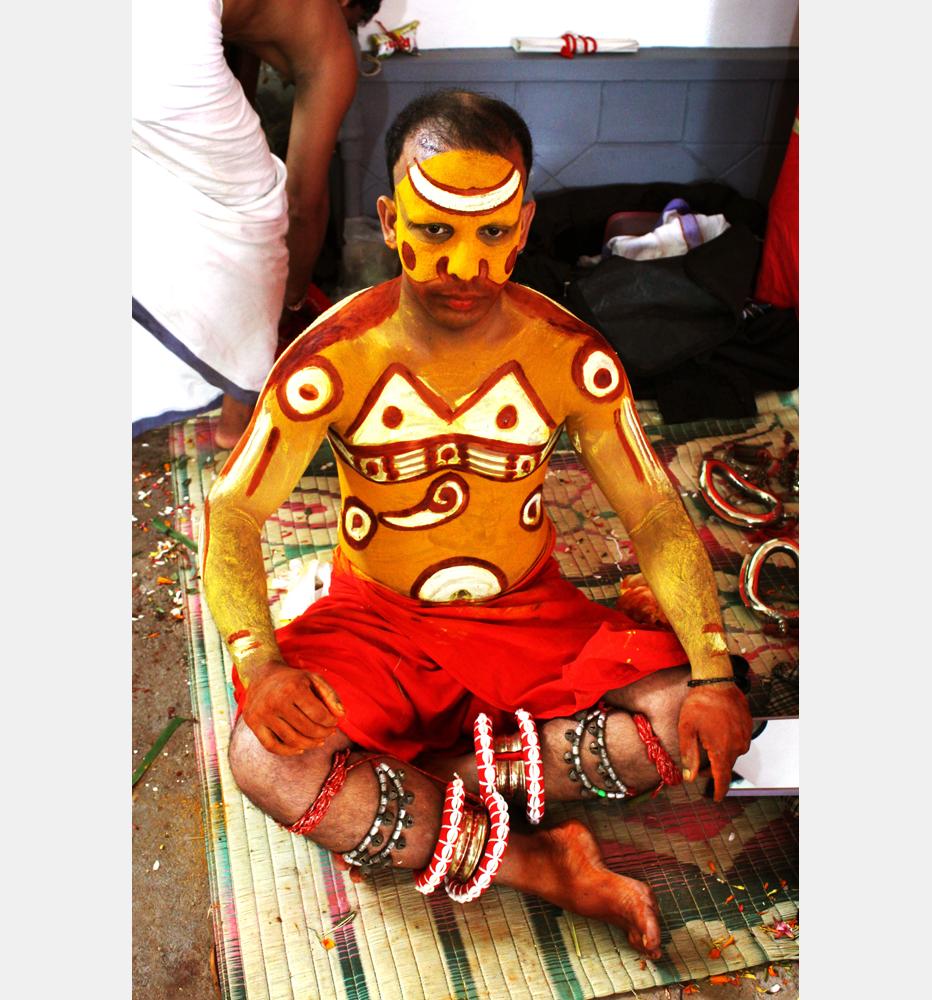
‘Kolakkaran’ the performer who is transforming himself from human to god, indirectly spreading the vedic message ‘Aham Brahmasmi’ which mean I am the god.
-

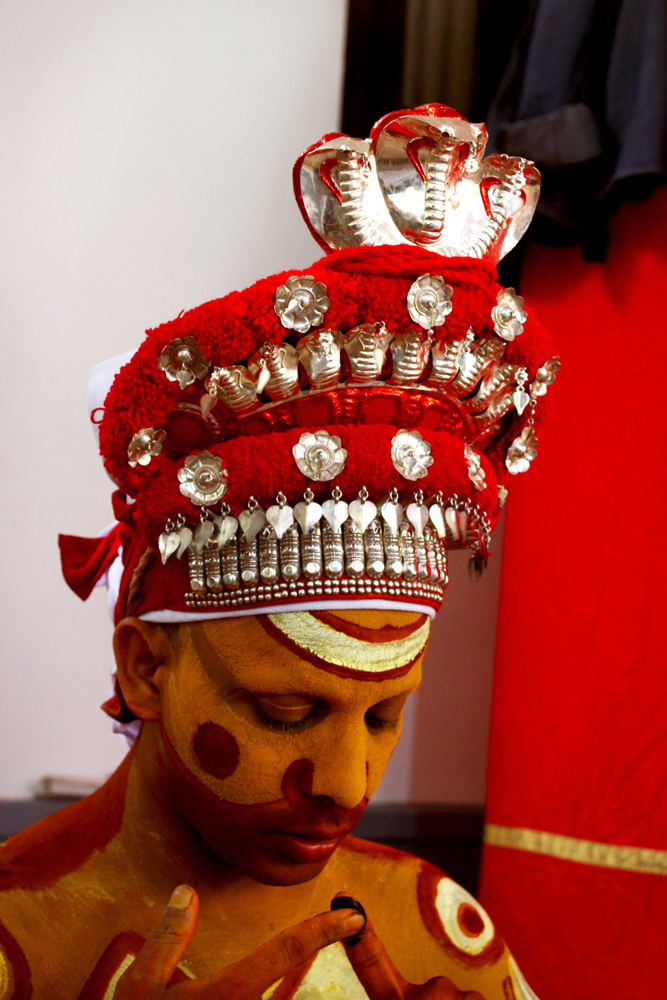
Holy crown of Muthappan and the silver embellishments depicts that he is embodiment of Lord Shiva.
-

“Thirumudi” the headgear of Muthappan which is adorned with beautifully handcrafted silver jewelries.
-

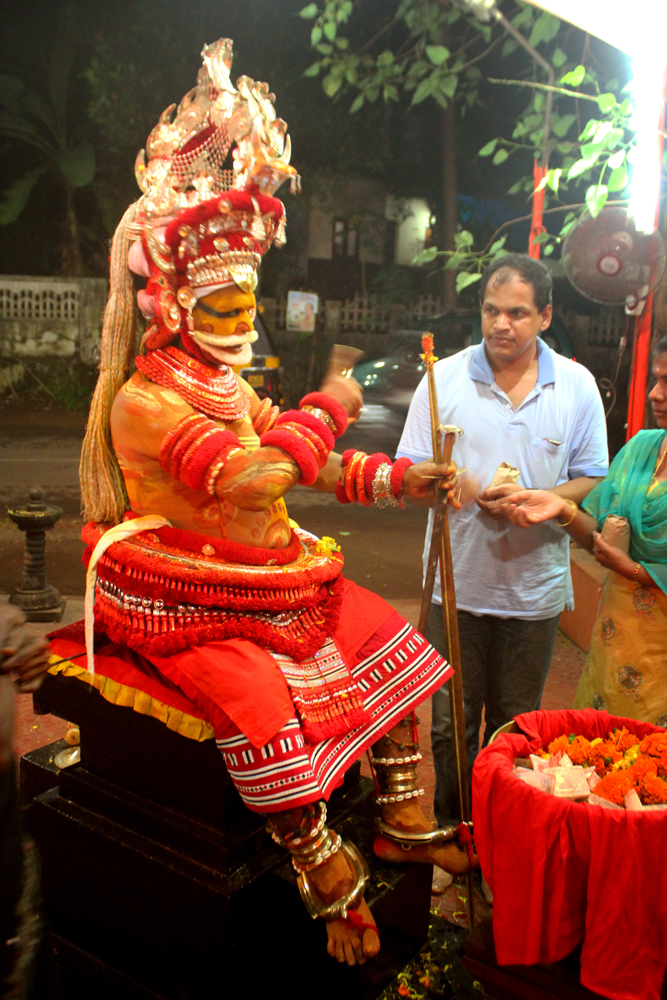
Muthappan at his fullest manifestation.
-

‘Kuri Kodukkal’ Muthappan is giving blessings to his devotees.


Muthappan, or Sree Muthappan, is a Hindu folk deity widely worshipped in the North Malabar region of Kerala. He is regarded as the embodiment of two divine forms, Thiruvappana and Vellattam - representing Lord Vishnu and Lord Shiva, respectively. Unlike most Theyyam performances, which are conducted only during specific seasons, Muthappan Theyyam is performed throughout the year. According to legend, Muthappan was found as an abandoned infant by the Brahmin couple, Ayyankara Brahmin and Paadikutti Antharjanam, who believed him to be a divine gift from Lord Shiva. As he grew older, he chose to associate with the Kurichiya tribal community, sharing their food and lifestyle and rejecting the rigid caste practices of his Brahmin household. His actions led to conflict with his adoptive father, who eventually banished him. Before leaving, Muthappan revealed his divine identity and promised to protect and bless those who remembered him.
After leaving Ayyankara Illam, Muthappan wandered through the forests and settled at Kunnathurpadi, where he lived among the hill tribes. A popular legend describes his encounter with the toddy tapper Chandan, whom he first turned into stone and later restored to life after the prayers of Chandan's wife. Muthappan then entrusted Chandan and his descendants with the sacred duty of offering toddy and fish during his worship, a tradition that continues to this day. Muthappan later returned to comfort his foster parents in their final moments and became revered as the protector of the people. These legends are preserved and performed through Muthappan Theyyam, where ritual songs and dance narrate his life and teachings. The oral traditions of Theyyam also celebrate local heroes and deified figures who challenged social inequality, and many scholars view Muthappan as a symbol of compassion, social justice, and resistance to caste discrimination. Archaeologists Bridget and Raymond Allchin have further suggested that elements of Theyyam preserve traditions dating back to the Neolithic and Chalcolithic periods.