
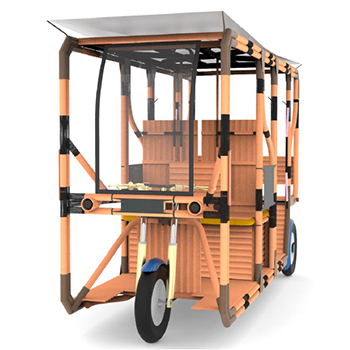
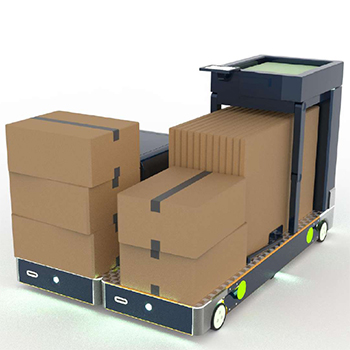


Last-mile travel is that part of a journey that involves the movement of goods or people from a certain point of a journey to their final destination. It is the last part of the travel where it is difficult for the primary mode of transport to reach the drop-off location. The package can range from goods to living passengers. In India, the last mile travel has predominantly been man-pulled rickshaws and fossil fuel-based motor vehicles such as rickshaws, taxis, minivans, and trucks. These vehicles are very convenient and practical, but the only drawback is that they pollute the environment. So, to put a check on the pollution levels, a switch is slowly being made from fossil fuel-based vehicles to electric vehicles; in this case, that go-to vehicle is an e-rickshaw. The market for e-rickshaws in India is very limited and is only restricted to local brands and companies, with one option from Mahindra that is meant to transport passengers. These small companies source components from Indian and foreign-origin vendors, assemble them, and sell them via a dealership network. One prominent issue with these vehicles is that they don’t have any standardisation or regulation guiding their manufacturing. The only regulation it has is the I-CAT regulations. Which simply states the overall dimension and speed limit of the vehicle. This is perhaps to bring them under the government’s radar, as they were being illegally imported as components and parts from China at a very cheap rate. The primary focus of this project is to create a local alternative that is easy to manufacture, sustainable, and green and can generate employment. The project focuses on designing a vehicle that can be adapted for multiple use cases, prototyping, building testing, and refining a full-scale working prototype using bamboo as the primary structural material.