
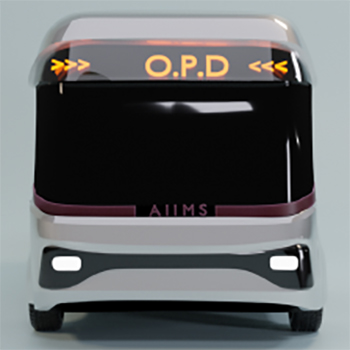


The unavailability of effective first-mile and last-mile connectivity emerges as a significant factor discouraging people from opting for public transport, leading them to rely on personal vehicles. This challenge is a nationwide concern, impacting urban mobility and contributing to the escalation of private vehicle numbers. AIIMS, a premier medical institute in India, confronts a similar challenge with first-mile and last-mile connectivity. While public transport efficiently takes patients, staff, students, and visitors to the main gate, navigating within the campus becomes a considerable hurdle. Parents without personal vehicles, including students and staff, face inconveniences, often relying on sporadic modes of transport like auto rickshaws. The situation worsens during nighttime and adverse weather conditions, compelling patients to undertake lengthy walks due to the scarcity of available transportation. This connectivity gap leads to a surge in personal vehicles on campus roads, resulting in road congestion and parking space shortages. The exponential growth in private vehicles emerges as a primary contributor to air and noise pollution within the serene AIIMS campus. After the initial user study, it has become evident that an internal transportation system, run by the AIIMS administration, can be a transformative solution. This proposed system aims to seamlessly connect various crucial landmarks within the campus, including gates, hostel complexes, and markets. After collection of all data, a design brief is formulated.