Jump to navigation

  •  
  •  
  •  

  • Courses
  • Resources
  • Case study
  • Showcase
  • Tools
  • Gallery
  • Videos

Search form

Search

    unblocked games retro bowl
  • yohoho
  • unblocked games

unblocked games-

unblocked games-

unblocked games-

unblocked games-

unblocked games-

unblocked games-

unblocked games-

unblocked games-

unblocked games-

unblocked games-

unblocked games-

unblocked games-

unblocked games-

unblocked games-

unblocked games-

unblocked games-

unblocked games-

unblocked games-

unblocked games-

unblocked games-

unblocked games-

unblocked games-

unblocked games-

unblocked games-

unblocked games-

unblocked games-

unblocked games-

unblocked games-

unblocked games-

unblocked games-

unblocked games-

unblocked games-

unblocked games-

unblocked games-

unblocked games-

unblocked games-

unblocked games-

unblocked games-

unblocked games-

unblocked games-

unblocked games-

unblocked games-

unblocked games-

unblocked games-

unblocked games-

unblocked games-

unblocked games-

unblocked games-

unblocked games-

unblocked games-

Animation Design Communication Design Design Fundamentals Interaction Design Product Design Tools for Design Open Design
Home / Case study / Augmented Reality for Understanding Hybridization in Organic Chemistry / Introduction
Design Case study

Augmented Reality for Understanding Hybridization in Organic Chemistry

Developing a prototype using innovative AR design and various marker-based interaction techniques
by
Rubayat Ahmed and Prof. Jayesh S. Pillai
IDC, IIT Bombay
Introduction
 
  • Printer-friendly version

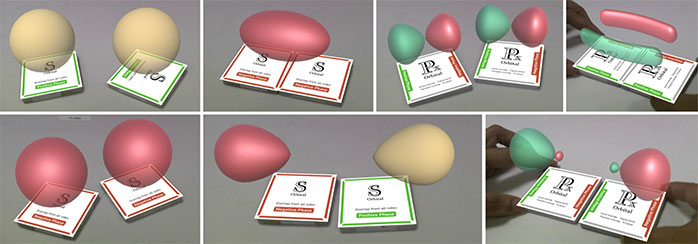
Spatial ability plays an important role in chemistry learning, as students are required to visualize specific microstructures, but the visualization of chemistry topics is a difficult task for students with traditional methods. Teachers and academicians use various analogies and methods to help students understand the topic. Still topics like Hybridization which is a very abstract concept in itself where multiple atomic orbitals are mixed together to form new hybrid orbitals, students find difficulty in understanding the concept and end up mugging it.

This project is focused on how we can visualize the concept of hybridization in a more intuitive manner for students with the help of augmented reality. As augmented reality is becoming more accessible day by day, it's a good opportunity for teachers as well as students to leverage the capabilities of AR for better learning opportunities. Objective of the project is to develop a working prototype through novel design interventions in augmented reality, while exploring different marker based interaction techniques.

Case Study Download:
• Augmented Reality for Understanding Hybridization in Organic Chemistry......
 

  • Introduction
  • Case Study - Slide Show
  • Links
  • Contact Details
  • Credits

Creating Digital-learning Environment for Design


  • Courses
  • Resources
  • Case study
  • Showcase
  • Tools
  • Gallery
  • Videos
  • Animation Design
  • Communication Design
  • Design Fundamentals
  • Interaction Design
  • Product Design
  • Tools for Design
  • Open Design
  • Contribute to our Dsource
  • About
  • People
  • Events
  • Job@D'source
  • Contact Us
  • Privacy Policy
  • Download App
  • YouTube
  • Facebook
  • Twitter

Indian Language
English Bangali Gujarati Hindi
Kannada Malayalam Marathi Punjabi
Sindhi Tamil Telugu Urdu