Design Case study
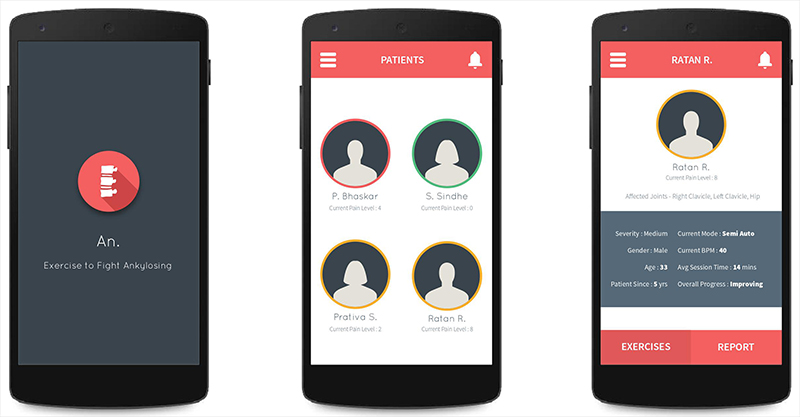
An - Exercise Application
Interactive full-body exercise experience for people affected with Ankylosing spondylitis
by

Introduction

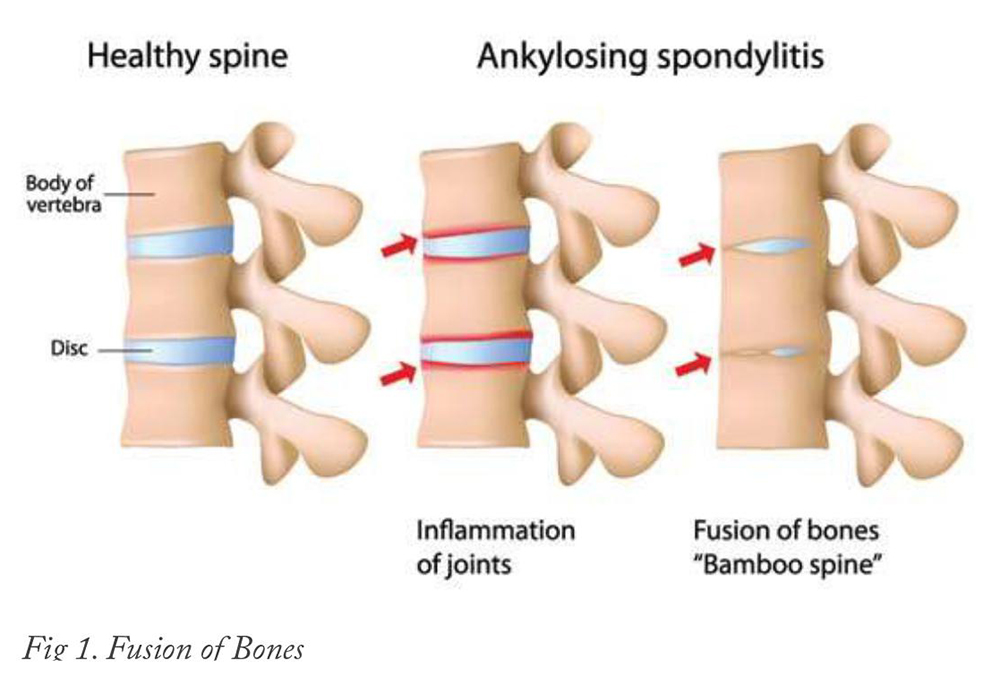
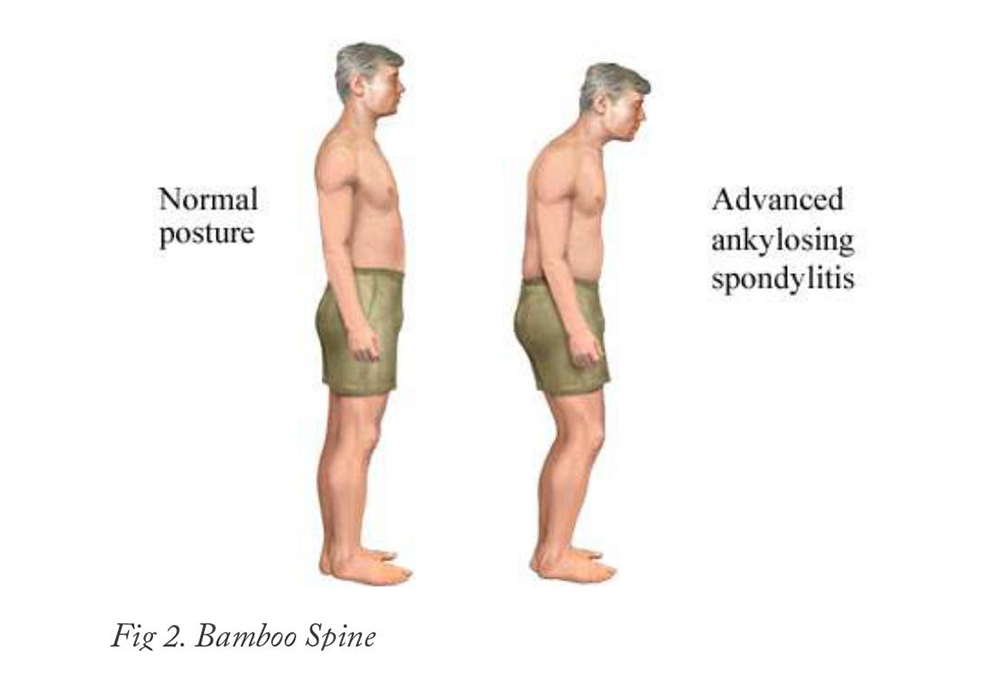
Ankylosing spondylitis (AS) is an inflammatory disorder of unknown cause that primarily affects the axial skeleton, peripheral joints and frequently involves extra-articular structures. Sacroiliitis is often the earliest manifestation of AS. Joint margins are gradually replaced by fibrocartilage (Fig. 1) and are ossified. Eventually, the joint obliterates bridging the adjacent vertebral bodies which give a “bamboo spine” (Fig. 2) appearance. All management regimes of AS should ideally include an exercise program designed to maintain posture and range of motion.
In India, accessibility, affordability and lack of knowledge about the disease are major concerns for two tier cities, suburbs and villages. Patients living in tier one cities lack time and motivation to adhere to the daily exercise regime. Recent efforts to connect patients over social media have been successful in addressing some concerns such as dietary doubts and clinical treatments. However, access to an exhaustive set of exercises involving both affected and active joints is still limited. While city dwellers have access to well trained physiotherapists, suburbs and villages in India lack professional physicians, let alone physiotherapists. Even in cities, affordability and accessibility can be a concern for patients belonging to the lower socio-economic strata. Patients who have both access and the ability to afford physiotherapists, lack motivation and flexibility in exercise timings. Rigidity in appointments and time spent in travelling to such facilities are barriers to having a regular exercise regime. The aim of this project was to design an interactive full body exercise experience platform while addressing issues such as accessibility, affordability and motivation issues for patients affected with AS.
The project had two dimensions:
• An exercise regime with a virtual instructor.
• Games based on exercises.
The virtual instructor demonstrated exercises, followed by the patient performing these exercises with a sensor tracking their movements and giving them necessary feedback. This approach addresses the affordability and accessibility concerns. Motivating patients to exercise was still a challenge. The second part of the solution gamifies the exercise experience for unmotivated patients.
The two methods were tested with patients and evaluated qualitatively. Results suggest that the system has potential to cater to the needs of both motivated and unmotivated patients.
Case Study Download:
• An - Exercise Application......