Design Case study
Changing Food Waste Behaviours
Studying the Effect of Interactive Installations on Behaviour Change
by

Introduction

Food waste is a chronic problem in India, amounting to a loss of ₹58,000 crores worth of resources per year. It is a waste of edible resources, water, manpower, electricity and time. Moreover, the disposed food materials pose severe threat to our environment if not segregated and composted properly. Wasting food on plate is a habitual and predictable behaviour problem. While one of the most obvious ways to tackle this issue is to bring about policy level changes, imposing fines and penalties on people, it is a highly intrusive and paternalistic approach.
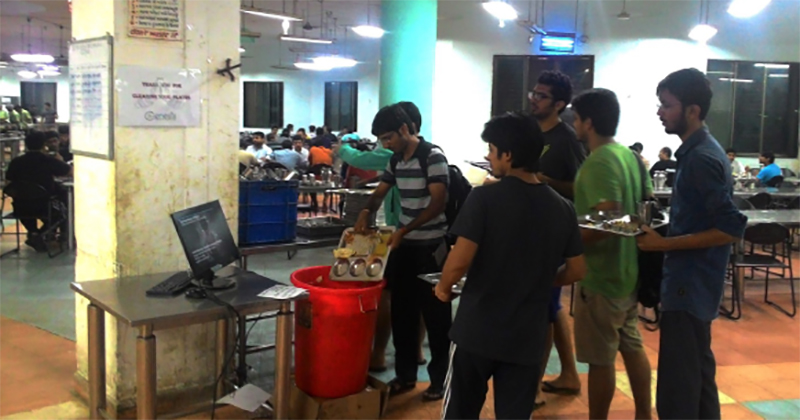
There are multiple stages of food waste but the aim of this project is to focus on people leaving food on their plate. Through contextual inquiry in a mess, it was observed that people are not open to being questioned about food waste and why do they waste food on their plates. A tendency to put the blame on the quality and taste of food served was perceived.
This project is an attempt to persuade people to not waste food without being paternalistic or bringing about policy level changes, a coercive approach that often fails to persuade people and bring about a change in their way of thinking. A more non intrusive approach would be to ‘nudge’ people [16] in a way as non-intrusive as possible, thereby raising awareness and trying to achieve a transition from habitual behaviour to a well defined conscious action.
Interactive installations have the potential to create awareness and motivate people and have been attempted before in addressing social issues. Installations, put up publicly, can effectively draw substantial attention, are non intrusive in nature and can be made to interact with people in an engaging way. It can make the audience think as they interact with the installation, in an attempt to shift away from the habitual behaviour cycle. This can have a cumulative effect where the motivated users generalise and apply it to save other valuable resources like water and electricity.
Effect of two types of interactive installations, performative and incidental, were studied on students of IIT Bombay and the amount of individual and total food waste was recorded before and after the installation was put up at the mess. Statistical tests were performed to evaluate the quantitative data assuming normal distribution, which was further validated by an online survey with both structured and open ended questions.
The final results are awaited.
Case Study Download:
• Changing Food Waste Behaviours......
• Changing Food Waste Behaviours_Report......