Jump to navigation

  •  
  •  
  •  

  • Courses
  • Resources
  • Case study
  • Showcase
  • Tools
  • Gallery
  • Videos

Search form

Search

    unblocked games retro bowl
  • yohoho
  • unblocked games

unblocked games-

unblocked games-

unblocked games-

unblocked games-

unblocked games-

unblocked games-

unblocked games-

unblocked games-

unblocked games-

unblocked games-

unblocked games-

unblocked games-

unblocked games-

unblocked games-

unblocked games-

unblocked games-

unblocked games-

unblocked games-

unblocked games-

unblocked games-

unblocked games-

unblocked games-

unblocked games-

unblocked games-

unblocked games-

unblocked games-

unblocked games-

unblocked games-

unblocked games-

unblocked games-

unblocked games-

unblocked games-

unblocked games-

unblocked games-

unblocked games-

unblocked games-

unblocked games-

unblocked games-

unblocked games-

unblocked games-

unblocked games-

unblocked games-

unblocked games-

unblocked games-

unblocked games-

unblocked games-

unblocked games-

unblocked games-

unblocked games-

unblocked games-

Animation Design Communication Design Design Fundamentals Interaction Design Product Design Tools for Design Open Design
Home / Case study / Redesigning of Wheelchair for Indian Context / Introduction
Design Case study

Redesigning of Wheelchair for Indian Context

Lightweight mobility for a physically challenged person
by
Lovendra Kumar Shukla and Prof. Nishant Sharma
IDC, IIT Bombay
Introduction
 
  • Printer-friendly version

India is not a physically disabled friendly country as compared to other countries.

According to the 2011 census, 2.1% of the Indian population is physically disabled. According to the 2011 census, 75% of persons with disabilities live in rural areas, 49% of disabled population is literate and only 34% are employed.

If we think of mobility aid for the disabled person, public transportation system seems very discriminatory to disabled people. Most common modes of public transport don’t keep in mind disabled people, especially people using a wheelchair. Even if ramps are provided somewhere, a major complaint is that those ramps are not properly built according to the regulations, which makes going up and coming down the ramp a challenge.

The design of wheelchairs started by means of an internet study to know the current scenario of wheelchairs. Market study was carried out to know the present manufacturers available in India.

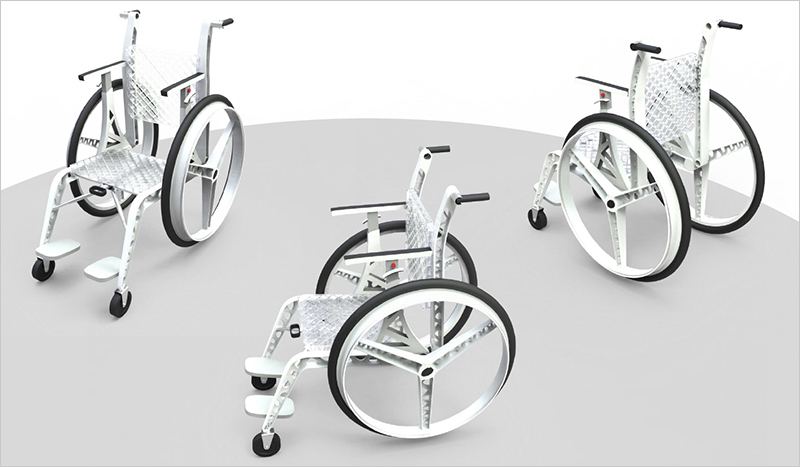
For better understanding of products available in market I have done comparison between the existing products. Ethnography study was done by myself as a user to observe the problems of the existing product and to address the design gap in the existing product to the user needs. The feedback which was taken from actual users and attendees was also considered for concept generation and design execution. The final output is a wheelchair that must have ease of manoeuvre to the user by providing better transportability and transferability.

Case Study Download:
• Redesigning of Wheelchair for Indian Context......
• Redesigning of Wheelchair for Indian Context_Report......
  • Introduction
  • Case Study - Slide Show
  • Links
  • Contact Details
  • Credits

Creating Digital-learning Environment for Design


  • Courses
  • Resources
  • Case study
  • Showcase
  • Tools
  • Gallery
  • Videos
  • Animation Design
  • Communication Design
  • Design Fundamentals
  • Interaction Design
  • Product Design
  • Tools for Design
  • Open Design
  • Contribute to our Dsource
  • About
  • People
  • Events
  • Job@D'source
  • Contact Us
  • Privacy Policy
  • Download App
  • YouTube
  • Facebook
  • Twitter

Indian Language
English Bangali Gujarati Hindi
Kannada Malayalam Marathi Punjabi
Sindhi Tamil Telugu Urdu